
MARPOL 73/78
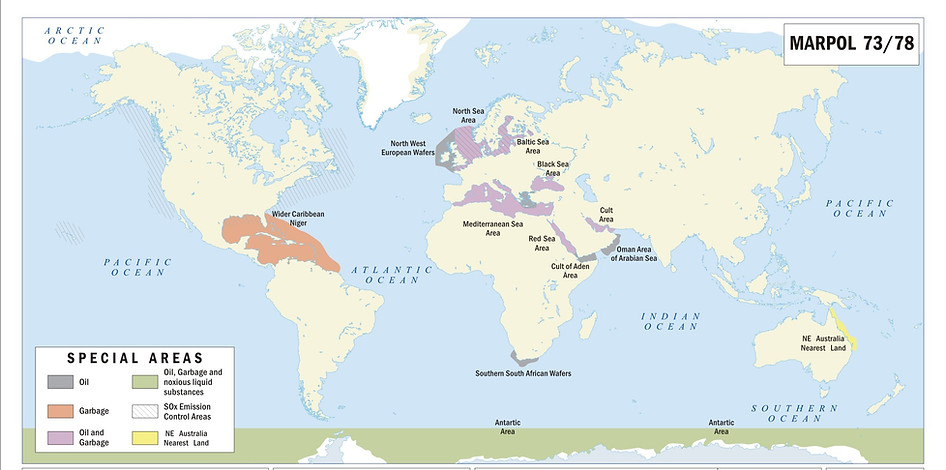
MARPOL 73/78 is the primary international convention developed by the International Maritime Organization to prevent pollution of the marine environment from ships, covering both accidental spills and routine operational discharges. It establishes a global legal framework that regulates how ships handle pollutants such as oil, chemicals, sewage, garbage, and air emissions, through six technical annexes with specific limits, equipment requirements, and record-keeping obligations. In practice, it controls day-to-day ship operations—including bilge discharge, sludge management, cargo handling, waste segregation, and fuel usage—while requiring documentation like Oil and Garbage Record Books to ensure traceability. The convention is enforced by flag states and port state control, meaning ships can be inspected anywhere in the world and detained or penalized for non-compliance. Ultimately, MARPOL’s function is to reduce environmental damage from shipping by combining operational rules, engineering controls, and strict enforcement mechanisms.
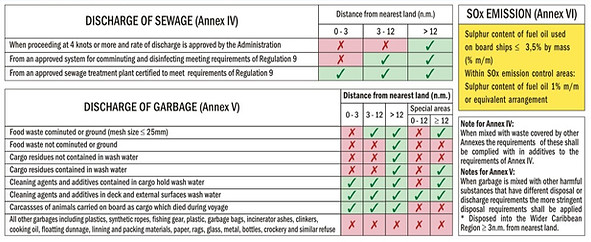
DISCHARGE OF SEWAGE AND GARBAGE
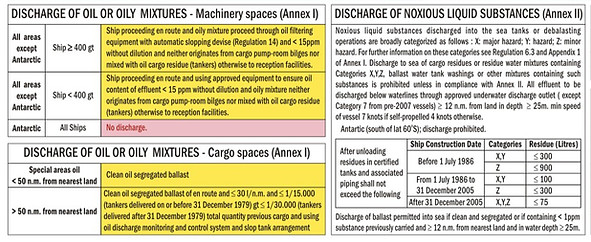
DISCHARGE OF OIL AND NOXIOUS LIQUIDS